


Newman Institute
What we delivered
- Stakeholder interviews across Mexico, Chile, Argentina, Colombia and Spain
- A two-day strategic working session with the founder in London
- Development of a clear, three-pillar model: Academy, Advisory and Advocacy
- International focus groups to test ideas with key audiences
- Strategic recommendations covering positioning, programme design, operations and communications
Building the strategic foundations for Newman Institute’s next stage of growth
Newman Institute has reached an important turning point. Founded in Latin America to advance trauma literacy, it has built strong credibility: respected faculty, rigorous courses and a loyal community of practitioners. But rapid growth had begun to create complexity: a broader offer, multiple audiences, and communications that had not yet caught up with the organisation’s scale.
The challenge was to structure Newman for its next phase of growth. Clarifying its offer, defining key audiences and aligning programmes, operations and communications. Mint Partnership was engaged to provide an independent, evidence-based strategy, grounded in research into how therapists in Latin America approach professional development and how Newman could support them over the long term.
The Strategic Tension
“How do we organise education, advisory work and advocacy so they reinforce one another? How do we speak to practitioners at different stages of readiness without fragmenting the institution?”
In early conversations with founder Oscar Morales, a central tension emerged.
Trauma was Newman’s greatest strength and, for part of its potential audience, its greatest barrier. For trauma-informed practitioners, it was the reason they enrolled. But for therapists trained in modality-bound traditions, where trauma rarely appears as a formal discipline, the language could create initial distance.
The question was not whether to dilute trauma. The evidence would ultimately confirm the opposite: trauma had to remain the intellectual and moral core of the institution.
The challenge was sequencing, widening access without weakening identity.
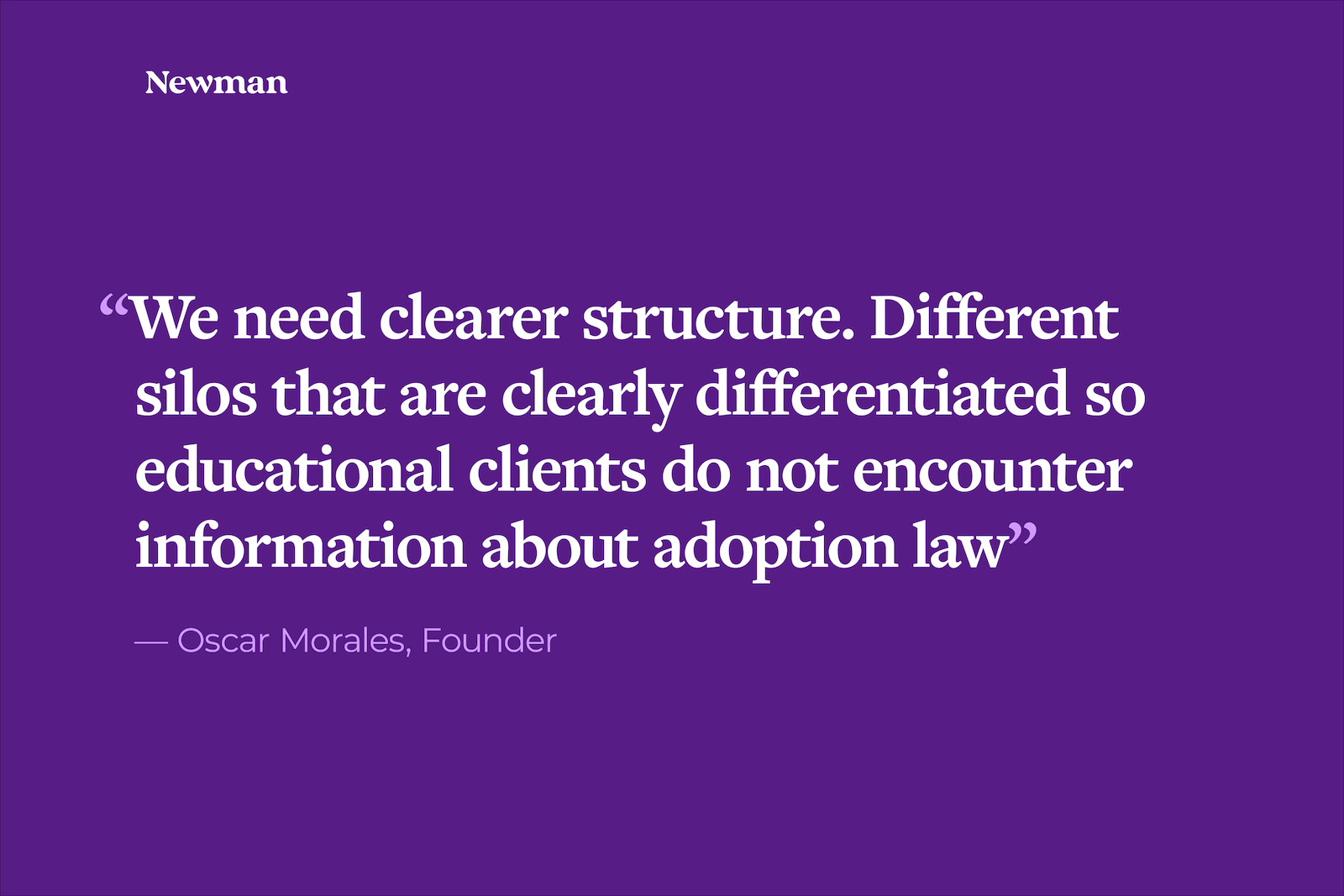
This was not simply a communications issue. It was structural. There was a need for clarity, a way of organizing different silos so that different need states are easily served. How might Newman enable the Academy audience to get straight to meeting their educational needs without wading through Advocacy content, and vice versa?
1. Discovery
Understanding the Practitioner from the Inside
“At some point you realise you are repeating patterns with clients that are your own. That is when you look for deeper training.”
Mint began from the outside in.
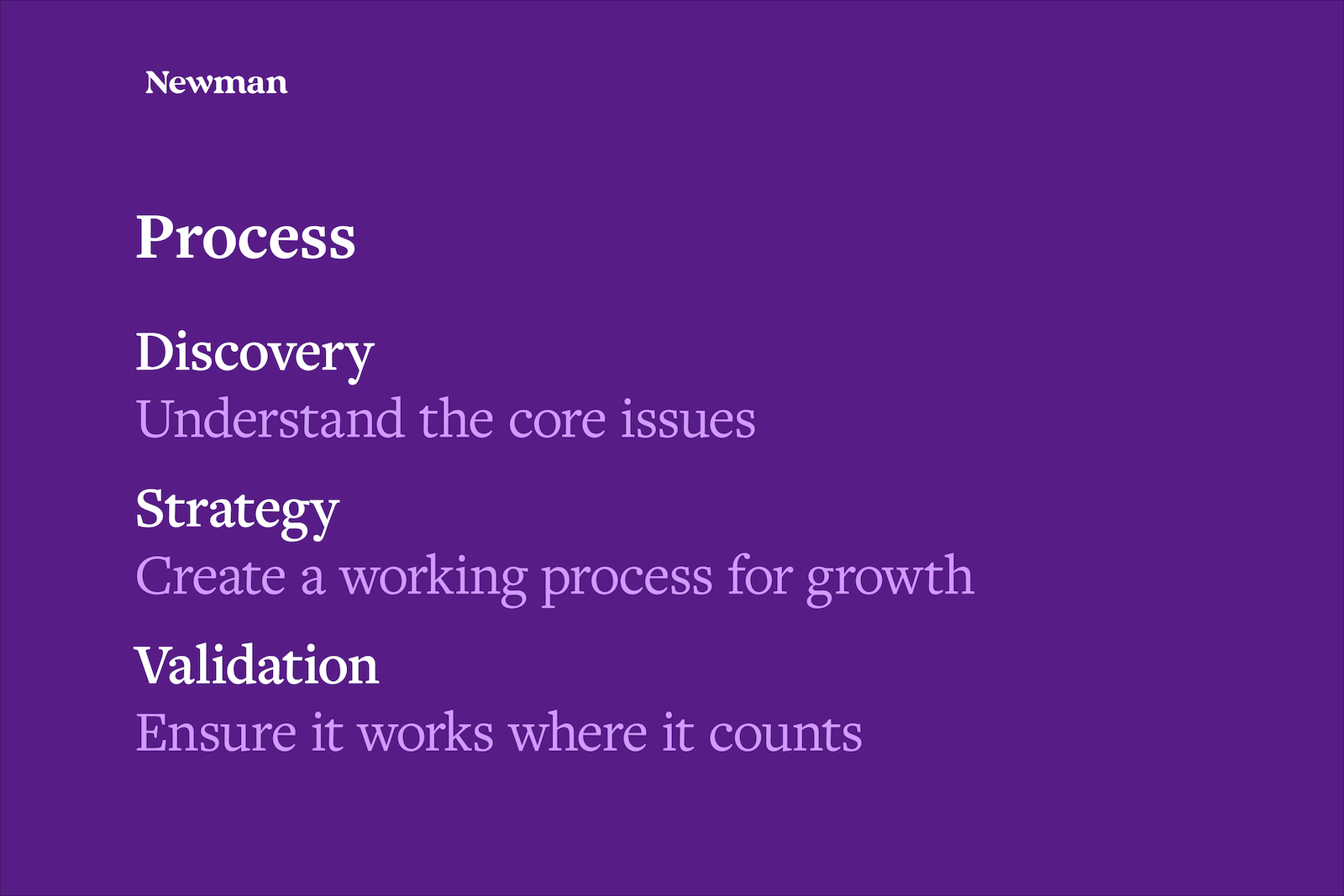
Over several months, we conducted in-depth interviews across Mexico, Chile, Argentina, Colombia and Spain with practitioners ranging from six to twenty-five years in practice. The sample included committed Newman alumni, lighter participants and therapists aware of Newman but never enrolled.
What emerged was not a demand for more content. It was a demand for containment.
Practitioners encountering clients who were not responding to existing tools were not simply looking for additional techniques. They were looking for integration between the cognitive frameworks they had trained in and the somatic, relational realities emerging in the therapy room.
One practitioner in Spain described the turning point:
Professional development and personal healing were deeply intertwined.
The market context sharpened the opportunity. Mental health education across Latin America remains fragmented and largely modality-bound. Trauma is rarely embedded formally within university curricula. Newman operated in a landscape of genuine unmet need, but also one shaped by cultural resistance to trauma framing and rising expectations around educational depth and credibility.
2. Strategy
Strategic Architecture for Growth
Findings were translated into strategy during a two-day working session with the founder in London.
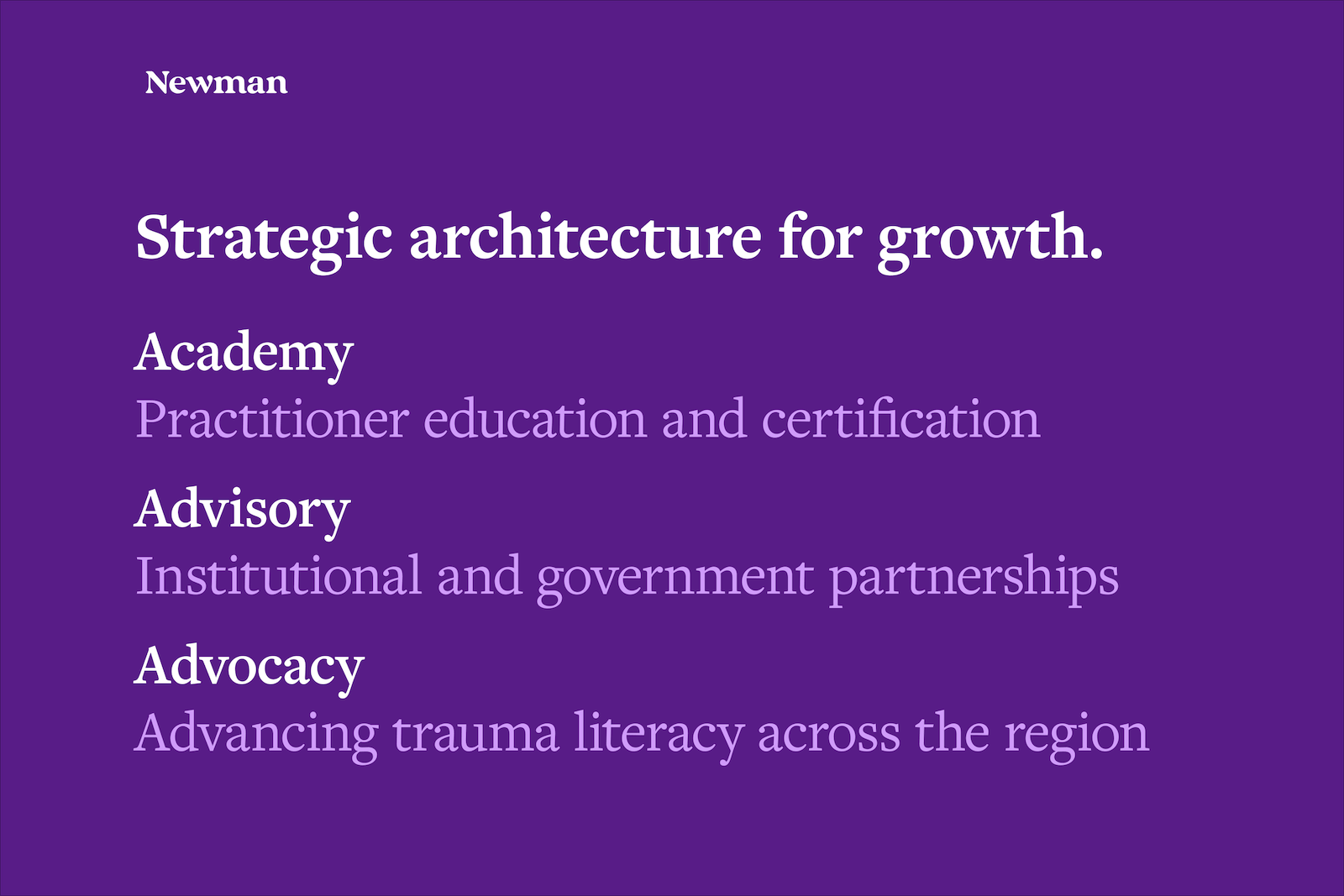
A three-pillar architecture emerged:
- Academy: practitioner education and certification
- Advisory: institutional and government partnerships
- Advocacy: advancing trauma literacy across the region
Rather than separate initiatives, these pillars formed a reinforcing system, designed to expand influence while protecting intellectual integrity.
Alongside this structure, we developed a segmentation model identifying distinct practitioner profiles, each defined by a different relationship to trauma, level of readiness and motivation for advanced training.
The implication was significant: a single positioning statement could not serve all segments without compromise. Newman needed differentiated entry points, unified by purpose, but tailored in framing and progression.

3. Validation
Testing the Hypothesis
“What would make me distrust Newman is if they grow without stabilising what exists.”
The strategic framework was then tested through focus groups conducted in Spanish across all identified segments.
Most assumptions were validated.
Entry points framed around practitioner-recognised problems, rather than abstract trauma terminology, broadened appeal without diluting rigour.
Crucially, the research also confirmed that as practitioners progressed, they valued Newman’s unwavering focus on trauma. Attempts to generalise or soften that identity risked weakening trust among its most serious audience. Growth required clearer framing, not dilution.
Two findings reshaped priorities:
- Practitioners placed significantly higher value on supervised, small-group practice than on large-scale formats, and were willing to pay a premium for it.
- Newman’s most committed community emerged as its sharpest critics, raising substantive concerns about quality and pace of expansion.
As one focus group participant warned:
This was not isolated feedback. It was a strategic signal.
Growth without consolidation risked eroding the very trust on which the institution depended.
What the Evidence Clarified
The research provided a clear set of sequencing priorities:
- Maintain trauma as the non-negotiable core of the institution
- Differentiate positioning by practitioner readiness
- Strengthen supervised practice infrastructure
- Stabilise operations before accelerating expansion
- Align communications with the relational principles Newman teaches
The outcome was not a new marketing message. It was a coherent strategic foundation, enabling Newman to grow in influence while reinforcing, rather than straining, institutional credibility.